
IELTS Speaking Test: The Ultimate Guide 🎤
The IELTS Speaking test evaluates your English communication skills in a face-to-face interview with a certified examiner. The test lasts 11-14 minutes and is divided into three parts. Your ability to express ideas clearly, use a wide range of vocabulary, and speak fluently determines your band score.
📌 IELTS Speaking Test Format
🔹 Part 1: Introduction & Interview (4-5 minutes)
The examiner will ask general questions about familiar topics, such as:
✔️ Your hometown – “Where do you live?”
✔️ Your job or studies – “What do you do for work?”
✔️ Your interests & hobbies – “Do you prefer indoor or outdoor activities?”
💡 Tip: Give complete answers, add relevant details, and avoid short responses.
🔹 Part 2: Cue Card Task (3-4 minutes)
You will receive a cue card with a topic and have 1 minute to prepare. Then, you must speak for 2 minutes continuously.
Example Cue Card:
🎤 Describe a book that had a big impact on you.
- What the book is about
- When you read it
- Why it was important
- How it influenced you
💡 Tip: Structure your response using transitions like “Firstly,” “In addition,” and “To conclude.”
The examiner may ask one follow-up question after your speech.
🔹 Part 3: Discussion (4-5 minutes)
This section involves a deeper discussion on the topic from Part 2. The examiner asks analytical and opinion-based questions.
Example Questions:
🔹 “Do you think books are better than movies?”
🔹 “How can reading improve a person’s knowledge?”
🔹 “What kind of books are most popular in your country?”
💡 Tip: Support your opinions with examples and logical reasoning. Express both sides of an argument if necessary.
📊 IELTS Speaking Scoring Criteria (25% Each)
Your performance is assessed based on four key criteria, each contributing 25% to your total score:
| Criteria | Description |
|---|---|
| 1️⃣ Coherence & Cohesion | Organising ideas logically, linking sentences smoothly. |
| 2️⃣ Lexical Resource | Using a range of vocabulary, idioms, and collocations. |
| 3️⃣ Grammatical Range & Accuracy | Using correct grammar with a variety of sentence structures. |
| 4️⃣ Task Achievement | Answering the question fully and appropriately. |
💡 Tip: Avoid overusing simple words like “good” or “bad.” Instead, say “remarkable” or “undesirable.”
IELTS SPEAKING CRITERIA📈 IELTS Speaking Band Score Descriptions
| Band Score | Description |
|---|---|
| 9 | Expert: Speaks fluently, uses a wide range of vocabulary, and has precise pronunciation. |
| 8 | Very Good: Makes rare mistakes, uses complex structures with confidence. |
| 7 | Good: Uses a variety of vocabulary but with occasional errors. |
| 6 | Competent: Communicates effectively but with noticeable errors. |
| 5 | Modest: Can hold simple conversations but struggles with complexity. |
| 4 | Limited: Speaks basic English with frequent mistakes. |
💡 Tip: To achieve Band 7+, practice speaking with native speakers or experienced trainers.
IELTS BAND CALCULATOR🎯 How to Improve Your IELTS Speaking Score?
✅ Practice Speaking Daily – Talk about different topics without hesitation.
✅ Expand Your Vocabulary – Learn synonyms, idioms, and phrasal verbs.
✅ Record Yourself – Identify pronunciation and fluency issues.
✅ Think in English – Avoid translating from your native language.
✅ Join Expert Coaching – Get personalised feedback from professionals.
🚀 Want to score Band 7+? Enrol in our expert-led coaching at Lifestyle Training Centre!
🏆 Why Choose Lifestyle Training Centre?
🌟 Live one-on-one training – Expand your overall English fluency rather than just byhearting answers.
🌟 Real-Time Mock Interviews – Simulate actual test conditions.
🌟 Detailed Performance Feedback – Identify mistakes and improve instantly.
🌟 Flexible Learning Options – Attend online or offline classes.
🌟 Get free training – If you take admission to your college through Lifestyle Training Centre, your training will be absolutely free.
📢 Start your IELTS journey today! Join Now 🚀
📱 Call/WhatsApp/Text: +91 9886926773
📧 Email: mail@goltc.in
IELTS Speaking Task Topics
Click on any topic to explore more!
Names

Learn about the importance of names and their cultural significance.
Study / Job

Discuss various aspects of studying and working in different fields.
Hometown

Explore the charm of your hometown and its unique features.
Accomodation

Understand various types of accommodation and living situations.
Weather

Learn about how weather influences daily life and activities.
Time

Discuss the concept of time, its importance, and time management.
Television

Talk about the role of television in modern entertainment.
Museum
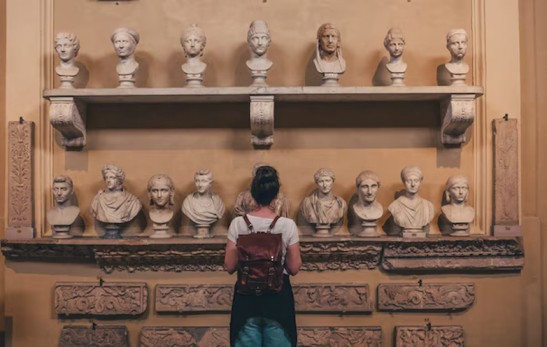
Discuss the cultural importance of museums and historical exhibits.
Holidays

Explore the significance of holidays and different celebrations.
Films

Learn about the impact of films on culture and society.
Leisure Time

Discuss how leisure activities impact personal well-being.
Sport

Talk about the role of sports in health, entertainment, and culture.
Vegetables and Fruits

Discuss the health benefits and importance of fresh produce.
Maths

Explore the role of mathematics in various aspects of life.
Sky

Discuss the beauty and scientific significance of the sky.
Clothes&Fashion

Explore how clothing reflects culture and personal expression.
Weekend

Discuss the importance of weekends and ways people relax.
Reading

Learn about the importance of reading and various reading habits.
Sleep

Explore how sleep impacts physical and mental well-being.
Trees&Plants

Discuss the environmental and health benefits of plants.
Newspaper

Discuss the evolving role of newspapers in the digital age.
Texting

Explore the role of text messaging in modern communication.
Memorising

Learn techniques for improving memory and memorization.
Travelling

Discuss the importance and impact of traveling in modern society.
Communication

Explore the modes and significance of communicating well
Letter&Email

Explore the differences and significance of letters vs. emails.
Swimming

Discuss the benefits of swimming for health and fitness.
Snacks

Explore the role of snacks in daily nutrition and lifestyle.
Photography

Discuss photography’s cultural and artistic significance.
Help

Talk about the importance of offering and receiving help.
History

Discuss historical events and their impact on modern society.
Handwriting

Explore the significance of handwriting in education and culture.
Music

Learn about the influence of music on emotions and society.
Colours

Discuss how colours affect perception and mood.
Teachers

Explore the role of teachers in shaping students’ futures.
Being Alone

Talk about the experience and benefits of spending time alone.
Teamwork

Learn the importance of teamwork in professional and social contexts.
Countryside & City

Explore the charm and benefits of living in the countryside.
Social Media

Discuss the impact of social media on society and relationships.
Friends

Explore the importance of friendships in life.
Artificial Intelligence (AI)

Talk about the future of AI and its role in society.
Climate Change

Discuss the causes and consequences of climate change.
Transportation

Explore different modes of transportation in your area.
Sustainable Transportation

Explore ways to make transportation more environmentally friendly.
Space Exploration

Learn about the latest advancements in space exploration.
Shopping

Explore how shopping influences culture and the economy.
Modern Technology

Discuss how modern technology is reshaping society.
Technology

Learn about the role of technology in everyday life.
Sustainable Living

Explore ways to live sustainably for the future of the planet.
Globalisation

Learn about the effects of globalisation on society and economies.
Global Warming

Discuss the causes, effects, and solutions to global warming.
Gender Equality

Explore the importance of gender equality in modern society.
Health and Fitness

Discuss the importance of maintaining a healthy lifestyle.
Renewable Energy

Learn about renewable energy sources and their impact on the environment.
Cultural Traditions in Kerala

Explore the unique cultural traditions of Kerala, your hometown.
Cultural Traditions in Your Country

Learn about the cultural traditions in your country.
Education System

Discuss the education system in your country and its effectiveness.
Traditional Cuisine

Explore the significance of traditional cuisines in your culture.
Do you need printed IELTS/ OET practice material? Place your order today. Available now for just Rs: 1,100 (including shipping all across India) Contact us at our WhatsApp number: +91 9886926773 to place your order. (Free for LTC students)

Would you like to undergo training for OET, PTE, IELTS, Duolingo, Phonetics, or Spoken English with us? Kindly contact us now!
📱 Call/WhatsApp/Text: +91 9886926773
📧 Email: mail@goltc.in
Visit us in person by following the directions on Google Maps. We look forward to welcoming you to the Lifestyle Training Centre.
Follow Lifestyle Training Centre on social media:
Thank you very much!
FAQ
1. What is the IELTS Speaking test?
The IELTS Speaking test is a face-to-face interview with an examiner that assesses your spoken English skills. It lasts 11-14 minutes and consists of three parts: an introduction, a cue card task, and a discussion.
2. How is the IELTS Speaking test scored?
Your score is based on four criteria, each worth 25% of your total band score:
- Fluency & Coherence – How smoothly and logically you speak.
- Lexical Resource – Your vocabulary range and word choice.
- Grammatical Range & Accuracy – Your use of grammar and sentence structures.
- Pronunciation – How clearly and naturally you speak.
3. What is the format of the IELTS Speaking test?
Part 1: Introduction & interview (4-5 minutes) – General questions about you.
Part 2: Cue card task (3-4 minutes) – Speak on a topic for 1-2 minutes.
Part 3: Discussion (4-5 minutes) – Deeper conversation on the Part 2 topic.
4. Can I ask the examiner to repeat a question?
Yes! You can ask the examiner to repeat or clarify a question, but they won’t explain meanings. However, avoid asking too often, as it may affect your fluency score.
5. How can I improve my IELTS Speaking score?
Practice speaking daily on different topics.
Expand your vocabulary by learning new words and idioms.
Record yourself and analyse your pronunciation.
Join mock interviews to experience real exam conditions.
Think in English to improve fluency and confidence.
Join Lifestyle Training Centre.
6. Do accents matter in the IELTS Speaking test?
No, as long as your pronunciation is clear and understandable, your accent won’t affect your score. Focus on intonation, stress, and rhythm instead.
7. Can I take notes in the IELTS Speaking test?
Yes, in Part 2 (Cue Card Task), you get one minute to prepare and can take notes before speaking. However, you cannot use notes in other parts of the test.
8. What happens if I make a mistake while speaking?
Minor mistakes won’t affect your score much. If you realise a mistake, correct yourself naturally and continue speaking confidently.
9. Should I use complex vocabulary and long sentences?
Yes, but only if used correctly. Using a mix of simple and advanced vocabulary with grammatically correct sentences will boost your score.
10. How long should I speak in the IELTS Speaking test?
Part 1: Short but detailed answers (2-3 sentences per question).
Part 2: Speak for 1-2 minutes continuously.
Part 3: Give well-developed answers with examples.
11. What if I don’t know the answer to a question?
If you’re unsure, stay calm and try to give a relevant response. You can say:
🔹 “I haven’t thought about it before, but I believe…”
🔹 “I’m not sure, but I think…”
12. What common mistakes should I avoid in the IELTS Speaking test?
❌ Giving one-word answers.
❌ Speaking too fast or too slow.
❌ Using memorised responses.
❌ Avoiding eye contact with the examiner.
❌ Sticking to basic vocabulary instead of using varied words.
13. Can I retake only the Speaking test if I get a low score?
Yes! With IELTS One Skill Retake, you can retake only the Speaking test instead of the full IELTS exam (available in select locations).
14. How can I prepare for the IELTS Speaking test with Lifestyle Training Centre?
At Lifestyle Training Centre, we offer:
✅ Real-time mock interviews for test practice.
✅ Personalised feedback to improve fluency, grammar, and vocabulary.
✅ One-on-one coaching for targeted improvement.
🚀 Start your IELTS Speaking preparation today! Join Now 🎯